Clients Are Talking to AI. Are You? Why Therapists Need to Pay Attention
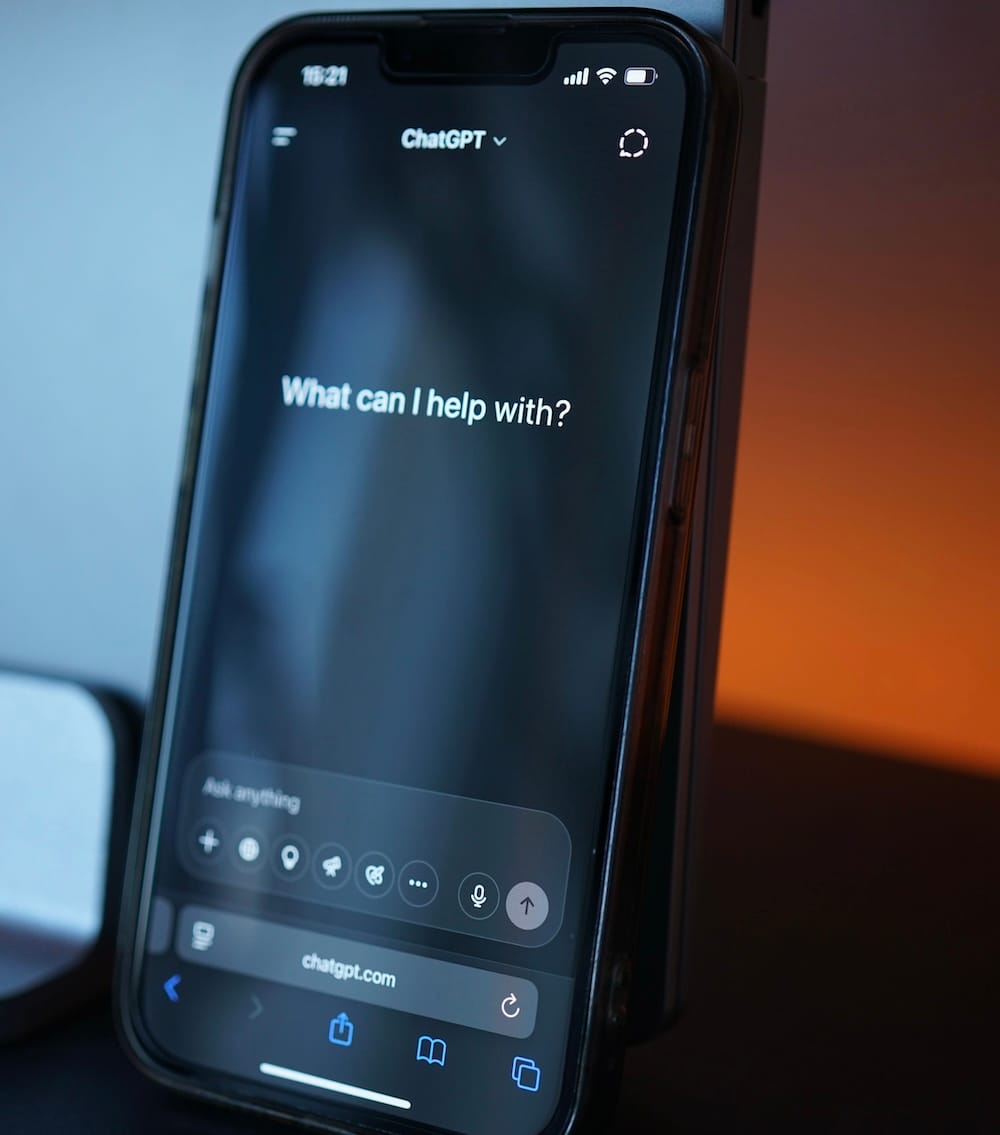
From self-help books to ChatGPT, why understanding the influences in our clients’ lives is becoming more important than ever.
An Echo from the Past
My father (Joe) was a clinical psychologist, and my mother (Jean) was a psychiatric nurse. Perhaps unsurprisingly, I eventually found my own way into the mental health profession. Although they encouraged me to pursue my own interests and discover the “colours of my parachute,” it seems mine was cut from the same cloth, and I landed remarkably close to where I started!
During the 1970s and 1980s, my mother developed a habit that I now appreciate more than I probably did at the time (having been just a kid). She would read the popular self-help books that were circulating among the general public (readily found at the pharmacy checkout) and discuss them with my father in the evenings. Her reasoning was quite practical: these were the books their patients might be reading, and she thought it was important that they understand the ideas and advice patients were encountering outside the consulting room.
Some of those books offered useful insights. Others made sweeping promises about psychological change or presented complicated emotional difficulties as problems with remarkably simple solutions. Worn paperbacks scattered around our house included titles like I’m OK—You’re OK (Harris, 1969), What Color Is Your Parachute? (Bolles, 1970), Your Erroneous Zones (Dyer, 1976), The Road Less Traveled (Peck, 1978) and Feeling Good: The New Mood Therapy (Burns, 1980). Whatever their merits, they were influencing how people understood themselves, their relationships, and their distress.
I’ve been thinking about that quite a bit lately, because we find ourselves in a remarkably similar situation today. The difference is that the self-help book has become something far more interactive, responsive, and potentially influential.
Enter the Era of Technological Self-Help
People have always sought psychological understanding outside psychotherapy. They talk to friends, read books, attend workshops, listen to podcasts, consult spiritual advisers, read horoscopes, and increasingly turn to online communities and social media for explanations of their emotional lives.
Artificial intelligence introduces something different into this familiar landscape.
A person can now describe an intimate problem to a chatbot and receive an immediate, detailed, apparently thoughtful response. They can ask follow-up questions, challenge the response, disclose more personal information, and continue the conversation for hours. The interaction may feel remarkably attentive, particularly when the system responds in language that resembles empathy, understanding, or therapeutic reflection.
Unlike a self-help book, a chatbot responds to the individual. It can remember the thread of a conversation, adapt its language, and offer suggestions that appear tailored to the person’s particular circumstances. This makes it potentially useful, but it also gives the interaction a quality that is quite different from reading general advice.
A client might ask ChatGPT whether their partner is emotionally abusive, whether they have a particular psychiatric diagnosis, whether their therapist is helping them, or whether they should end an important relationship. They may receive responses that seem reassuring and authoritative, even when the system has only a fragmentary understanding of the situation and the person.
One concern is that AI systems can be overly affirming. A response that feels supportive may also reinforce a person’s existing assumptions, particularly if the person presents events from a single perspective. In psychotherapy, we know how important it can be to remain curious about what is missing from a narrative, what may be defended against, and what alternative meanings might be possible. A chatbot may not reliably provide that kind of thoughtful challenge.
Of course, some people may find these conversations genuinely helpful. AI can offer information, help organize thoughts, suggest coping strategies, and provide a place to begin articulating experiences that feel difficult to discuss. It may also be available at moments when human support is inaccessible.
The point is not that these interactions are necessarily good or bad. It is that they may become psychologically significant, and we cannot assume that our clients will spontaneously tell us about them.
Why Clinicians Need to Become Familiar With AI
Over the past several years, I’ve attended a number of seminars by esteemed clinicians such as Frederic G. Reamer, PhD, and Todd Essig, PhD, addressing the implications of artificial intelligence and digital technology for psychotherapy. Their work has contributed to my growing sense that clinicians need to take these developments seriously, not simply as technological innovations but as changes in the environment in which psychotherapy now takes place.
Reamer’s writing on ethics and risk management is particularly relevant to the professional responsibilities that accompany emerging technologies. Essig, approaching these questions from a psychoanalytic perspective, has also contributed to important conversations about how technology affects human relationships and psychological experience.
I’ve also been reading Alessandra Lemma’s work on psychoanalysis and digital life. In The Digital Age on the Couch, Lemma explores how technological environments intersect with identity, embodiment, intimacy, and the analytic relationship. Her more recent Psychotechnical Becomings continues this exploration in the context of AI and digital mediation.
These writers approach the subject from different perspectives, but they share a recognition that technological developments cannot be considered entirely separate from the psychological lives of the people who use them.
I think clinicians need some firsthand familiarity with the systems their clients may be consulting. That doesn’t mean becoming enthusiastic adopters or accepting the claims made by AI companies. It means developing enough understanding to ask informed questions and recognize the kinds of interactions clients might be having.
One way to begin is simply to experiment with a chatbot using hypothetical situations. Ask it about anxiety, relationship conflict, grief, or a difficult decision. Notice how it responds, how readily it offers interpretations, how it handles uncertainty, and what happens when you challenge its assumptions.
It can be especially revealing to present the same hypothetical situation from two different perspectives and observe how the responses change. Such experiments can demonstrate both the apparent sophistication of these systems and the limitations of advice generated without a genuine therapeutic relationship or adequate knowledge of the person involved.
Naturally, these explorations should not involve entering identifiable client information into a public AI system. Familiarity with the technology need not come at the expense of confidentiality.
Bringing AI Into the Therapeutic Conversation
I was recently interested to read Scott Wallace’s article, Asking About the Elephant in the Room: A Clinician’s Checklist for Asking About Patient AI Use, published in November 2026.
Wallace makes a persuasive case for bringing patients’ use of AI into ordinary clinical inquiry. His article prompted me to think further about how easily we might overlook an influence that is becoming part of many people’s everyday emotional lives.
We routinely ask clients about important relationships, medications, substance use, work, sleep, social media, and other factors that may affect their psychological functioning. Increasingly, it may be just as relevant to ask whether they are consulting AI about personal or emotional difficulties.
The manner in which we ask matters. If a therapist approaches the subject with obvious disapproval, a client may be reluctant to disclose an interaction that has become meaningful to them. A curious, nonjudgmental approach is more likely to open a useful conversation.
For example, a therapist might wonder whether a client has ever used ChatGPT or another AI system to think through a personal problem, and what that experience was like. Did the response seem helpful? Was there anything surprising or unsettling about it? Did the conversation influence a decision, alter the client’s understanding of a relationship, or affect how they felt about themselves?
The answers may reveal something clinically important, not only about the information the client received but also about the function the interaction serves.
For one person, consulting AI may be a way of organizing thoughts before a difficult conversation. For another, it may become a source of repeated reassurance, a means of avoiding uncertainty, or an alternative to discussing something painful with another human being. Someone else may experience the chatbot as unusually understanding or reliably available, particularly when relationships with other people feel disappointing or complicated.
These possibilities deserve exploration rather than premature interpretation. The same behaviour can have very different meanings for different people, and its significance may change over time.
The Benefits, Limitations, and Clinical Implications
It would be a mistake to approach this subject as though AI could offer nothing of psychological value. Some people may benefit from accessible explanations of mental health concepts, practical suggestions for managing everyday stress, or help finding language for experiences they have struggled to describe.
For individuals who feel isolated, embarrassed, or uncertain about seeking professional help, a chatbot may provide an initial opportunity to put something into words. It may even encourage someone to pursue psychotherapy or raise a previously unspoken concern with an existing therapist.
At the same time, the limitations are substantial.
A chatbot does not know a person in the way a therapist gradually comes to know them. It has no independent access to the history, emotional context, relational patterns, or unconscious meanings that may be relevant to a particular difficulty. Its responses are generated from the information provided and the patterns learned during training, not from the kind of sustained clinical understanding that develops within a therapeutic relationship.
Nor does its apparent empathy necessarily correspond to the experience of being understood by another person. The language may resemble empathic attunement, but the nature of the interaction is fundamentally different.
This difference becomes especially important when clients begin to experience AI as a source of psychological authority. A response that is articulate, confident, and personally tailored can seem more reliable than it actually is.
There are also questions about how these interactions may affect the therapeutic relationship. A client might use AI to evaluate something their therapist has said, seek confirmation of an interpretation, or obtain advice about whether to continue treatment. Such conversations could support reflection, but they could also introduce misunderstandings or reinforce existing difficulties with trust, dependence, or uncertainty.
I don’t think therapists should assume that AI use is inherently a form of resistance, avoidance, or competition with the therapeutic relationship. That would be both simplistic and clinically unhelpful. But neither should we assume that these interactions are psychologically neutral. What matters is understanding the place they occupy in the particular client’s life.
AI as an Adjunct to Treatment: Questions of Clinical Responsibility
There is another dimension to all of this that I think deserves more attention: what happens when a client begins using AI as an informal adjunct to psychotherapy? If a client is regularly consulting a chatbot about their symptoms, relationships, emotional difficulties, or treatment decisions, that interaction may become part of the broader clinical picture, whether or not the therapist has recommended it.
We routinely consider other influences that may affect a client’s treatment, including medications, substance use, complementary therapies, and advice received from other healthcare providers. Although these are not equivalent to AI, the comparison raises an important question. If a client is receiving what amounts to therapeutic input from a chatbot, shouldn’t we at least be asking about it and, when clinically relevant, documenting its role in their care?
The ethical implications become particularly interesting when we consider situations involving risk. Suppose a client is relying on AI-generated advice that reinforces harmful beliefs, encourages a dangerous course of action, or undermines an established treatment or safety plan. What responsibilities does the treating therapist have when another source of guidance, operating entirely outside the usual structures of professional accountability, may be influencing the client’s decisions?
I don’t think there’s a simple answer, and I would be cautious about suggesting that a therapist is automatically responsible for advice a client receives from an AI system. But once we become aware that AI use may be affecting a client’s safety, judgment, or treatment, it seems reasonable to ask whether that information should inform our clinical assessment, interventions, safety planning, consultation, and documentation. The relevant obligations would depend on the circumstances, the clinician’s professional standards, and the applicable legal requirements.
For me, this is another compelling reason to bring AI into our conversations with clients. We cannot assess the clinical significance of an influence we don’t know exists. And as AI becomes more widely used for emotional and psychological support, I suspect questions about professional responsibility will become increasingly difficult to avoid.
Staying Informed Doesn’t Mean Being Uncritical
I want to emphasize that encouraging clinicians to become familiar with AI should not be mistaken for an endorsement of the technology or the industries developing it.
I have considerable reservations about the direction in which some of these developments are taking us. There are the environmental concerns, including the energy and water demands of the infrastructure required to train and operate increasingly powerful AI systems. There are serious questions about privacy, the collection and use of personal information, and the extent to which people understand what happens to the intimate material they disclose. These issues are especially troubling when the information being shared concerns emotional distress, sexuality, family relationships, trauma, or other deeply personal aspects of life.
But my concerns extend beyond environmental costs and data privacy.
I’ve been reading Byung-Chul Han’s Psychopolitics, and his thinking about digital power and the ways contemporary technologies can influence our inner lives has stayed with me. Although Han’s book predates the current generation of conversational AI, I find his observations increasingly relevant to the world we are entering.
One of the questions his work raises for me is whether technologies that appear to offer freedom, convenience, and personal empowerment may also shape our desires, habits, and ways of understanding ourselves in ways we scarcely recognize.
When we invite AI into conversations about our most intimate experiences, we are doing something more consequential than consulting a source of information. We are allowing a commercially developed technological system into the private spaces in which we think about ourselves, our relationships, our suffering, and our hopes.
In a sense, we are inviting it into our thoughts, our emotional worlds, and perhaps even something we might call our souls. That may sound like an unusual word in a discussion of technology, but I use it deliberately. There is something about the interior life of a person that seems inadequately captured by the language of information processing, efficiency, and optimization.
Lemma’s psychoanalytic writing is helpful here because it directs attention toward the complex relationship between technology, embodiment, desire, identity, and the experience of being human. These are not simply questions about whether a particular application works well. They concern the ways our psychological lives may be shaped by the environments and relationships in which they unfold.
I find myself wondering what happens when people increasingly turn to systems designed to respond immediately, fluently, and often agreeably to their emotional needs. What might be lost when uncertainty, frustration, misunderstanding, waiting, and the difficult work of negotiating relationships with other people can so easily be bypassed?
I don’t pretend to know the answers, and I recognize that AI can sometimes provide useful assistance. I use it myself, including as a tool for exploring ideas, researching topics, organizing information and checking my grammar. My concerns are not based on a belief that we can or should simply reject these technologies. But I do think we need to remain attentive to what their growing presence may mean for our psychological and relational lives. The fact that something is convenient, impressive, or even helpful does not necessarily mean that its broader influence is benign.
Which brings me back to my mom and those old self-help books.
She wasn’t interested in them because she thought they held the answers to her own problems or those of their patients. She read them because she understood that people are influenced by the ideas they encounter, and that a clinician needs to know something about the world in which a patient’s psychological life is taking place.
I think she would be doing much the same thing today, although I can only imagine what she might have made of a self-help book that answers back!
The responsibility, as I see it, is not to embrace AI uncritically or to dismiss it reflexively. It is to understand enough about it to recognize its possible influence on our clients, while preserving the curiosity, independence of thought, and ethical judgment that good clinical work requires. And perhaps, in the process, to remain equally curious about what these technologies are doing to all of us.
References and Further Reading
Han, B.-C. (2017). Psychopolitics (E. Butler, Trans.). Verso Books.
https://www.versobooks.com/en-ca/products/226-psychopolitics
Lemma, A. (2017). The digital age on the couch: Psychoanalytic practice and new media. Routledge.
https://www.routledge.com/The-Digital-Age-on-the-Couch-Psychoanalytic-Practice-and-New-Media/Lemma/p/book/9781315212524
Lemma, A. (2026). Psychotechnical becomings: Psychoanalysis, identity, desire, and mourning in the age of AI and digital mediation. Routledge.
https://www.routledge.com/Psychotechnical-Becomings-Psychoanalysis-Identity-Desire-and-Mourning-in-the-Age-of-AI-and-Digital-Mediation/Lemma/p/book/9781041217749
Reamer, F. G. (2025). Artificial intelligence in the behavioral health professions: Ethical and risk management issues. NASW Press.
https://naswpress.org/product/artificial-intelligence-in-the-behavioral-health-professions/
Wallace, S. (2026, November 4). Asking about the elephant in the room: A clinician’s checklist for asking about patient AI use. Substack.
https://open.substack.com/pub/drscottwallace/p/asking-about-the-elephant-in-the

Patricia C. Baldwin, Ph.D
Clinical Psychologist
President of Note Designer Inc.